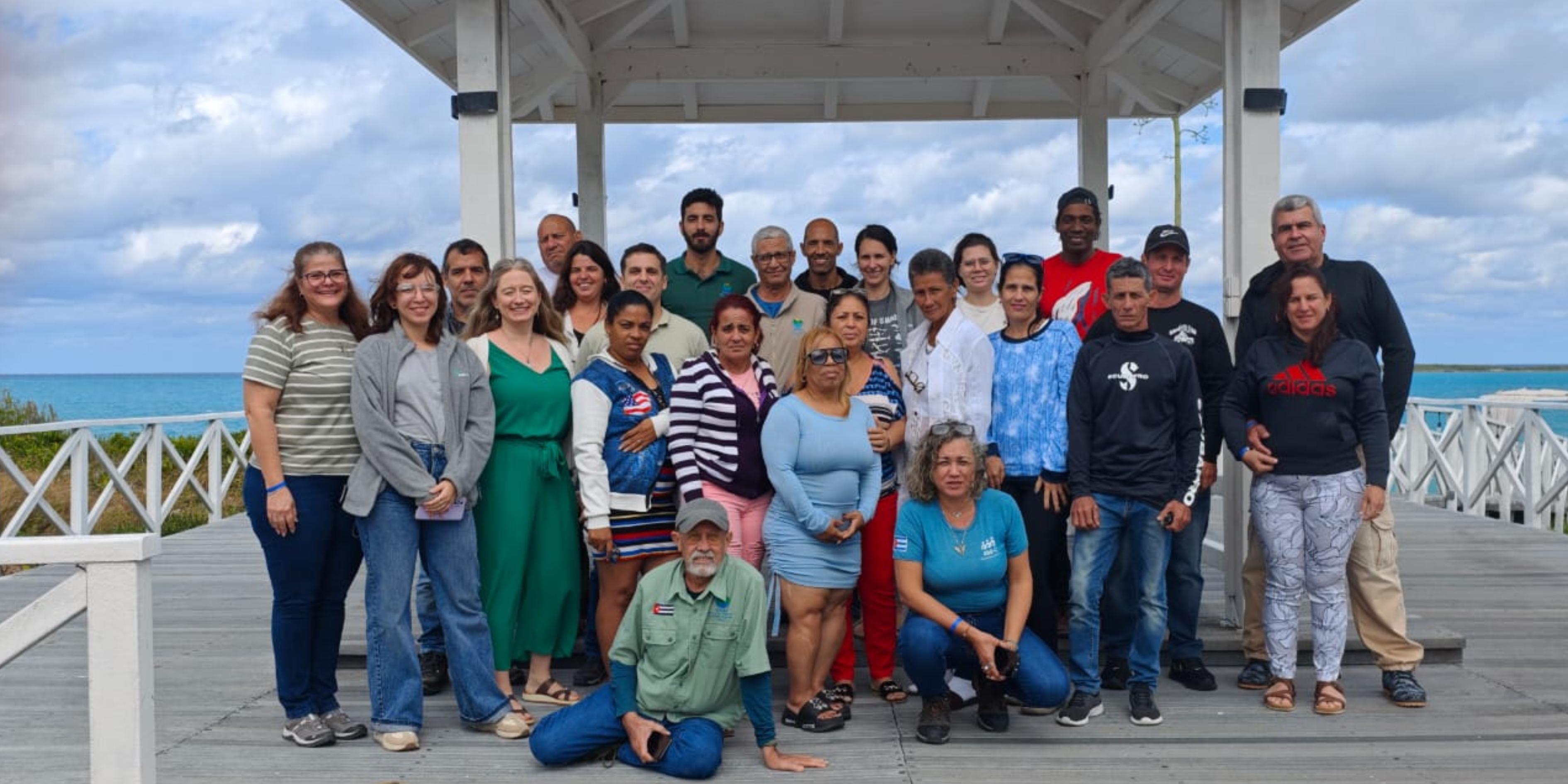
The PROCARIBE+ Project supports marine conservation in Cuba through three main components. Its actions are rooted in close collaboration with the National Center for Protected Areas (CNAP).
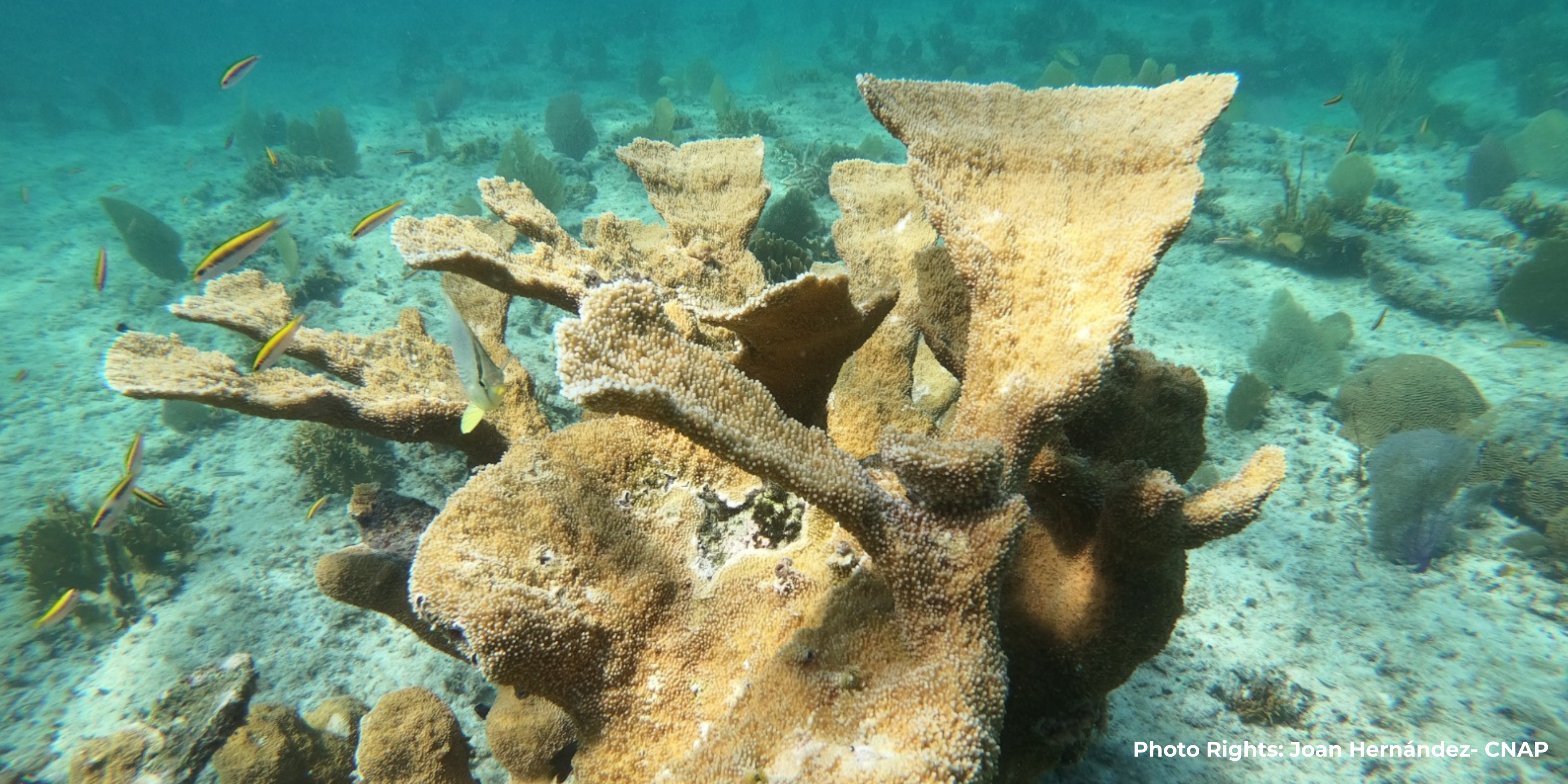
The first component focuses on expanding and improving the national network of Marine Protected Areas (MPAs). This includes supporting the creation of two new MPAs, strengthening management practices and building capacity in two existing sites, and promoting the recognition of Other Effective Area-Based Conservation Measures (OECMs) as an official tool for marine conservation in the country.
As part of Cuba’s broader climate resilience strategy, the second component involves a blue carbon storage capacity assessment of coastal marine ecosystems in pilot sites within marine protected areas, as a measure to mitigate the effects of climate change on biodiversity.
The third component targets the development of sustainable socio-ecological alternatives for coastal communities. By working directly with two communities closely connected to MPAs, the project promotes blue economy initiatives that improve livelihoods while protecting natural resources.
All components are supported by capacity-building activities aimed at technicians, specialists, and decision-makers. These efforts ensure that conservation actions are not only effective, but also sustainable and locally driven, strengthening Cuba’s long-term ability to protect its marine ecosystems.