The overall objective was to review, discuss and make decisions/formulate recommendations on key parts of the OCM Work Programme:
Ocean/Blue Economy Strategic Action Programme (SAP)
State of the Marine Environment and Socio-Economics (SOMEE).
Infrastructure (MDII): A blueprint for integrated data and knowledge management.
OCM Knowledge Hub.
In her opening remarks, the EG chair, Mrs. Susana de Beauville-Scott, Programme Director - Sustainable Ocean Management at OECS Commission, established that: “Having established the foundations of the Mechanism, we now have an opportunity to build momentum around its implementation and ensure that the work programme responds to the evolving priorities of the region. Colleagues, the challenges facing our shared ocean continue to evolve, and they cannot wait for our processes to be completed. We therefore have an opportunity, and a responsibility, to build momentum and accelerate progress, ensuring that the OCM work moves quickly from planning to implementation. For the OECS, we see the OCM as an important expression of what regional cooperation can achieve when we bring our expertise, institutions and resources together around shared priorities”.
Over the two days, the meeting set a clear, forward-looking trajectory by evaluating the outcomes of Phase 1 of the implementation of the OCM Work Programme, laying a resilient foundation for launching Phase 2.
Looking toward strategic action, the Executive Group underscored the OCM’s role as a dynamic collaboration space for improving the efficiency and effectiveness of Members through enhanced coordination and Collaboration.
A significant portion of the discussion tackled the practical challenges of linking national-level ocean governance to regional processes. Participants candidly acknowledged that national ocean sectors across the Wider Caribbean still tend to operate in silos. To bridge this gap, the OCM is tasked with stepping up advocacy for National Intersectoral Committees and actively align with national Sustainable Ocean Plans. Furthermore, to lighten the load on member states, the group emphasized minimizing reporting burdens by harmonizing OCM indicators with data frameworks already in use across the region.
The Executive Group also discussed financial sustainability, recognizing that moving beyond project-based lifecycles requires an independent operational funding model. The group proposed a dual-track strategy focusing on long-term financing for the OCM alongside the development of "financiable" projects that deliver high impact on the ground. To achieve this, regional and international financing institutions must be integrated into the OCM process early on to help mobilize capital and back bankable ocean initiatives.
Ms. Susana Perera Valderrama, Programme Management Officer at UNEP Cartagena Convention Secretariat, stated in her closing remarks that: “The OCM can provide regional coherence, but implementation ultimately depends on the engagement, priorities and capacities of our countries. The value of this mechanism depends on our ability to share information, coordinate our activities and follow through on the responsibilities agreed here. The progress made during these two days reflects the value of working together”.
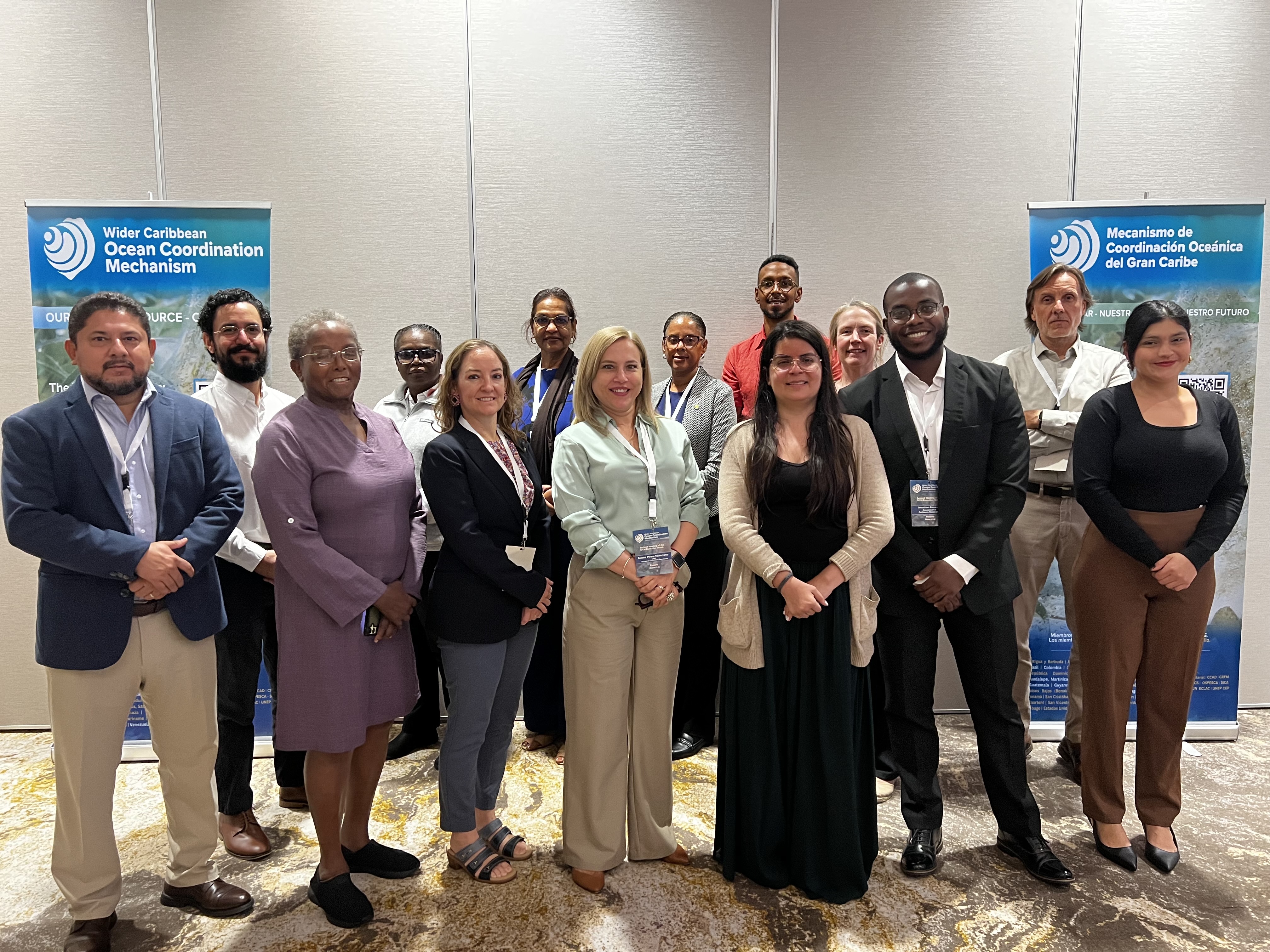
The organizations participating in the meeting included: Central American Commission for Environment and Development (CCAD) [EG Member], CRFM Secretariat [EG Member], ECLAC [EG Member], IOC-UNESCO (IOCARIBE) [EG Member], OECS Commission [EG Member], SICA / OSPESCA [EG Member], UNDP [EG Member], UNEP Cartagena Convention Secretariat [EG Member], Association of Caribbean States (ACS) [EG Prospective Member], FAO / WECAFC [EG Prospective Member], ARAP Panamá [SG Vice-Chair], Ministerio de Ambiente Panamá [SG Vice-Chair], Caribbean Biological Corridor (CBC) [Observer], and the OCM Secretariat / PROCARIBE+ [OCM Secretariat], for a total of 25 participants, 14 in-person and 11 remote/ virtual.